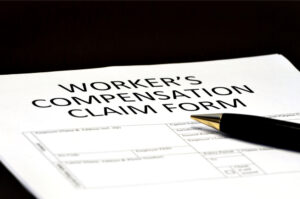
What Do I Do If My Workers’ Compensation Claim In Illinois Is Denied?

workers compensation claimWhen a workers’ compensation claim is denied, it can be quite shocking, but the good news is that it is not the end of the road. A Waukegan workers’ compensation attorney can walk you through the appeal case but before that, make sure that your claim was denied without reason.

Why workers’ Compensation Claims are Denied

If you are denied workers’ comp benefits, your employer is obligated to send you a written explanation of the reasons behind it. If that hasn’t happened, approach your employer yourself for an explanation. While each case is unique, most claims are denied because of the following reasons

Incomplete Report Or Lacking Records

If your report is incomplete or missing vital details, your claim may be denied. This is nothing that a quick revision cannot fix.

A Pre-existing Condition

An employer may try to deny benefits by claiming your injury was a pre-existing condition. However, even in this case, you may be able to get compensation especially if the condition worsened because of your job.

The Accident Occurred Off-Site

As per Illinois law, your injury has to arise from your employment for you to be eligible for compensation. However, you can still claim benefits even if it happens offsite while you were working for the employer. If your employer is denying you compensation because of this, you should hire a Waukegan workers’ compensation attorney to dispute the decision.

The Injury Isn’t Covered

Certain injuries may not be covered by your workers’ Compensation such as mental health. If that is the case, even if you work in a stressful environment, your claim for psychiatric care may be denied.

Lack of Cooperation

If you fail to cooperate with the insurance company when they call you to ask about your claim, it may be denied. This can happen if you refuse to give a recorded statement. While you have the legal right to not do so, your claim can still be denied. In this case, you should hire an attorney to dispute the denial.

Workers’ Compensation Appeal

You have the right to appeal a denial of your workers’ compensation claim. There are several ways to do this. You can bring your case to an arbitrator who is appointed by the Illinois workers’ Compensation Commission (IWCC). If the decision is unsatisfactory for you, you can go ahead and appeal to IWCC commissioners.

If you are still denied benefits, you can appeal the case to the Appellate and Circuit Court. If that is unsuccessful as well, you can ask your Waukegan workers’ compensation attorney to take your case to the Supreme Court. In this case, you may end up with more compensation than you anticipated because of the hardships you had to endure due to denial of the claim.

See more on our Illinois Workers’ Compensation FAQs page.

The Law Offices of Robert Edens have been fighting for the rights of injured workers for two decades and can help you as well. If you or someone you know is being denied benefits by their employers, get in touch with us for a consultation today. We have experienced attorneys who can handle your case and ensure you get the compensation you deserve.

Steps You Need to Take After an Auto Accident in Illinois

Cook County car accident lawyerAccording to official stats, around 6.7 million car collisions are reported in the U.S. every year. Being involved in an auto accident can prove traumatic, depending on the injuries sustained. In this guide, we’ll take a look at what you should do when faced with a car accident.

Examine Your Injuries

Before anything else, determine whether you or someone else needs urgent medical care. In case of a medical emergency, call 911 at your earliest. When you’re sure everyone is safe, assess the damages caused to your vehicle.

However, do not exit the vehicle without looking back for any approaching vehicles. On major highways, in particular, secondary accidents are a common occurrence, so you might be better off by staying inside your car until the police arrive.

If you do manage to safely exit the vehicle and the involved cars are blocking the traffic, move them out the way to prevent further collisions.

Call the Police

No matter how negligible the collision is, call the police as soon as you can. You must file a legal accident report when the law enforcement personnel arrive. By reporting the incident to the police, you extricate yourself in criminal liability for failing to inform the authorities and document critical information. The step also proves valuable when you proceed to file your insurance claim.

Capture the Scene

Unless the vehicles are obstructing the traffic, avoid moving them from their position after the accident. Use your smartphone to capture images of the scene, including the vehicles involved, your injuries, the damages caused to your car, and other drivers.

These will serve as valuable evidence when you go on to file your personal injury claim. In the fear and confusion that follows, one can easily forget this critical step. Also, if you can find any witnesses, walk over to them and try to note down their phone numbers and addresses.

Exchange Information With Other Drivers

Walk over to other drivers who were involved and note down their names, phone numbers, addresses, license plate number, vehicle identification number, insurance information, make and model of the cars involved, and driver’s license number of other drivers.

Contact Your Insurance Company

Regardless of whether you’re at fault, contact your insurance company soon after the collision. Your insurance company will provide valuable information to your attorney about other drivers and their insurances. In the case of uninsured motorist insurance, you will be covered by your own insurance company. To learn about the Illinois insurance requirements, go through this Illinois Car Accident Law.

Also, if you don’t hear from the at-fault driver’s insurance company in a few days, call them yourself and inform them that you’ve been involved in an auto accident with one of their clients.

When it comes to hiring an attorney, Robert T. Edens is the best Cook County car accident lawyer to help you through the claims process. To book a consultation, contact us at your earliest.

What if the Other Driver Had No Insurance? Who Pays My Bills?

auto accidentThere are more than 8 million licensed drivers in the Illinois state, according to Statista. Under state law, drivers are required to carry insurance coverage of $50 per accident and $25,000 per person. Yet, around 11.8% of the drivers in the state are uninsured.

So, what happens when you suffer damages in an auto accident, and the other driver carries no insurance? Let’s find out:

How Are You Compensated?

When you’re involved in a collision with an uninsured driver, you’ll be covered by your own insurance policy. Every auto insurance policy must include uninsured motorist coverage, with a standard amount the same as the minimum liability coverage, $25,000 per person and $50,000 for more than one person.

Uninsured motorist insurance also covers you if you are a victim of a hit-and-run accident case or where the at-fault driver is unable to pay for the damages.

You may choose to reduce the amount of uninsured motorist coverage by signing the designated document. We still recommend that you have no less than $100,000 as minimum coverage because medical bills can pile up more quickly than most of us think.

However, this doesn’t dissolve the uninsured or underinsured drivers from their legal responsibilities. Your insurance company will seek restitution against them and exercise their subrogation rights to recover the compensatory amount they paid to you.

In addition, the uninsured motorist also faces other legal action such as having their vehicle ceased and moved to a police storage area, a hefty fine for not maintaining insurance, suspension of their driver’s license, and more.

Also, when it comes to collecting your uninsured motorist claim, insurers are not easy to deal with. It often takes a lot of preparation and effort to prove that the other driver was at fault. When you attempt to seek coverage under your own policy, your own insurance agent becomes your opponent.

When negotiating with your insurer, it’s important to note that property damage other than your vehicle is not covered under uninsured motorist coverage. This means that if your smartphone, glasses, or other items were damaged or lost during the collision, they wouldn’t be covered under uninsured motorist coverage. A separate portion of your insurance policy will be used to pay for those damages.

Hire a Personal Injury Attorney

When dealing with your insurance claim, you desperately need an advocate. This is where a personal injury lawyer can be of great help in dealing with your insurance claim. Your attorney may also help determine whether it’s worth suing the uninsured driver. This might be useful if your medical bills and damage to the vehicle are too high to be compensated by your own insurance policy.

Personal Injury Attorney

If you’re looking for an Antioch auto accident lawyer, Robert Edens and his law firm are here to help you. The firm has been dealing with insurance companies on behalf of their clients for many decades. For consultation and legal advice, contact us today!

What Can I Do If My Employer Refuses To Pay Me While Off Due To Injury?

injured at work workers compensation attorneySo you have been on a construction site and busted your head open or broke your arm while trying to lift a heavy load at the office, you can claim compensation as long as you follow the right protocol. This includes ensuring the incident is reported to HR, a visit to the doctor that is pre-approved by your employer, and maintaining records of all of your bills and treatments.

Chances are that you also followed the doctor’s advice to take time off work to recuperate. Since Illinois is a no-fault state, you should be able to get workers’ compensation without the need to prove misconduct or negligence on the part of your employer in order to receive benefits. It should be an open and shut case unless your employer refuses to cooperate.

What You Can Do

If your employer did not purchase worker’s compensation insurance, he/she can face potential penalties and criminal fines. If workers compensation is available, as per the Illinois Worker’s Compensation Commission, and you are denied benefits post injuries, you can do one of the following:

  1. File a petition with the IWCC for penalties for delayed payments. You can fill out one or all of the boxes under Penalties as per your condition.
  2. File a petition in circuit court asking the court to intervene and make your employer pay up. This is in accordance with the Illinois Worker’s Compensation Act and the petition can be filed for free.
  3. Place a call to the Consumer Services Division.

Irrespective of the course you choose to take, make sure you have an experienced and competent worker’s compensation attorney with you. The process can be quite lengthy and complex for the uninitiated. If you try to do this solo, you may end up losing out on the compensation that is owed you whether you live in the state or commute to work there.

Personal Injury Attorney

The good news is that as per Illinois law, employers have no choice but to cooperate. If yours refuses to, you have every right to claim damages and enforce your rights. If you think that your employer is being difficult or delaying compensation deliberately by causing problems, hire a worker’s compensation attorney from the Law Offices of Robert T. Edens today. We can help you get the compensation you deserve irrespective of how influential your boss is. Get in touch with us for a consultation in our offices in Chicago, Libertyville, Waukegan, Woodstock, and Antioch, IL.

See more on our Illinois Workers’ Compensation FAQs page.

What Is An IME And Do I Have To Go?

Independent medical examinationAccording to the Illinois worker’s compensation law, insurance companies have the right to send you to a doctor of their choice for a one-time exam. This is called an independent medical examination (IME) and participation is mandatory. If you fail to go, your benefits can be suspended. This includes medical care, physical therapy, prescription pain medication, doctor consultations, etc.

Benefits of Independent Medical Examination (IME)

Some of the benefits you can get from attending an IME include the following:

  • Get an objective opinion in a medical-legal case against your employer.
  • Resolve concerns and disputes regarding medical treatment and your condition.
  • Reveal obstacles that may otherwise prevent you from getting fast resolutions.
  • Determine a relevant treatment plan.
  • Uncover a missed or inappropriate diagnosis and can also help doctors devise a new treatment plan that can aid your recovery.

What An IME Tries To Achieve

Going to an IME is in your best interest since it achieves the following:

  • Offering treatment recommendations that can speed up recovery.
  • Determine causation to a reasonable degree of medical certainty.
  • Figure out the duration of care required.
  • Figure out whether you have acquired the max benefit from the treatment.
  • Determine medical restrictions and the work restrictions you may face because of your condition.
  • Set a relevant target date for your maximum medical improvement status.

You can be sent to a second IME if there is a notable change in your condition or if they need to address a different medical issue. It can be a while till this happens.

Personal Injury Attorney

Generally, insurance companies may ask you to submit to an IME if there is a concern or issue regarding your compensation claim. In some cases, the doctor may wish to declare that you have recovered so that the insurance company can stop paying benefits sooner. This is understandable since these doctors are paid by the insurance companies.

However, if you think you have not recovered sufficiently and are being forced to give up benefits, you have grounds to sue for damages. In this case, you should have competent worker’s compensation lawyers in your corner such as from the Law Offices of Robert T. Edens. Get in touch with us for a consultation in our offices in Chicago, Libertyville, Waukegan, Woodstock, and Antioch, IL. We will have the best in our team on your case.

See more on our Illinois Workers’ Compensation FAQs page.

What Do I Need to Tell a Doctor After an Injury?

What to do after an injury, seeing a doctor, workers compensation lawyerMany of us will skip the doctor’s visit after an accident, especially if the injury seems negligible. Seeing a doctor is important from a healthcare and legal standpoint. What appears a simple headache may exacerbate into a traumatic brain injury, or a cut may get infected if you don’t seek immediate healthcare treatment. Besides, your healthcare providers’ medical records can serve as valuable evidence when it’s time to file your personal injury claim. If you’re wondering what to do after an injury, or more specifically, what to discuss with your doctor, this guide is for you.

What to Discuss With Your Doctor After an Injury

According to this post from Avvo, in order to get the best care as well as the most settlement money for an injury you need to see a doctor within 72 hours of an accident.

What Caused the Injury

Instead of just informing that you have a headache, for instance, inform the doctor about the cause of the problem, such as a recent vehicle collision or a slip and fall. In fact, share the precise details of the incident. This will help the doctor better understand your situation, and they develop an effective treatment plan.

Also, your doctor will document all this information, relating it to your medical conditions. Since investigators look for this connection in personal injury cases, it will make your case stronger when you sue the person responsible for your injury.

Your Pre-Existing Health Conditions

Don’t think that there’s no point in disclosing your past health conditions or injuries to the doctor. If you have asthma, diabetes, or faced a back injury two years ago, sharing this information with your doctor can directly impact the healing process.

Ask What Your Future Treatment Will Involve

Depending on the seriousness of your injury, the healing process can be lengthy and uncertain. Understanding what your future treatment looks like should mentally prepare you as well as help you estimate the cost of medications, physical therapy, and surgeries that you may seek compensation for.

Ask Whether You Should Continue Working or Not?

Some people are so overly loyal to their employers that they’ll continue to work even after sustaining severe injuries in a collision. The determination is undeniably commendable but can prove detrimental to their long-term health. Since working through the pain can exacerbate the condition or cause another injury, ask your healthcare provider about the work-related limitations you should be considering.

Personal Injury Attorney

By now, you should not just be aware of what to do after an injury but also what to discuss upon seeing a doctor. Moving ahead, your top-most concern should be to find a worker’s compensation lawyer to help you file your claim. For extraordinary assistance, contact Robert T. Edens, an experienced worker’s compensation lawyer serving in Chicago, Waukegan, Libertyville, Woodstock, and Antioch, IL.

Am I at Fault for a Car Accident on a Slippery Road?

car accident car accident lawyersWhen driving in snowy weather, you may love the outside view and feel cozy inside the vehicle, but the piling up snow or water can on your path prove outright dangerous for you and your family. According to the AAA Foundation for Traffic Safety, bad weather and wet, slippery road conditions are responsible for half a million crashes and 2000 fatalities in the US every winter.

So what happens when you face a car accident on a slippery road? Are you at fault if your vehicle collides with another? Let’s find out:

Are You Liable in a Bad-Weather Accident?

It’s important to understand here that as a driver, it’s your responsibility to stay aware of the weather conditions and adapt your driving behavior to it. When driving in bad weather, you should anticipate challenges like flooded sections on a roadway, reduced visibility, and slick pavement. Hence, you should not just drive slower than usual but also maintain a greater distance between the vehicle and other cars. Apart from maintaining control, you must take all reasonable measures to avoid collisions.

In case your road accident occurred near your home, you must have been aware of the poor weather conditions, and thus, sections of the roads should be prone to standing water. Ignoring everything, you chose to drive fast and tailgate a vehicle in front of you. You’re certainly at fault for the collision, as it clearly indicates that you were negligent in adapting your driving to the weather.

If, however, you did everything in your power to avoid an accident, you have all the rights to argue that you were not at fault or even that the other driver was negligible. This can be true if that car’s taillights had burned out, its driver switched the lane without prior indication or another type of negligence on their part.

However, proving your point in weather-related accidents is not as easy as it sounds. Investigators will not just take your word into account, but they will also consider the stance of the opposing party as well as interview other people, evaluate the traffic congestion at the time, closely assess the road conditions and the vehicles involved in a collision, and even the black box data from cars before reaching a verdict.

Personal Injury Attorney

Hence, you need strong legal representation to succeed in a car accident case associated with bad weather. While there are many car accident lawyers out there, no one beats Robert T. Edens. Whether you faced the collision in Chicago, Waukegan, Libertyville, Woodstock, or Antioch, IL, Robert Edens is ready to help you out.

How Is A Wrongful Death Settlement Paid Out?

Wrongful DeathIf your loved one has died due to the negligence or recklessness of someone else’s behavior, you can file a wrongful death lawsuit. This lawsuit determines the compensatory money and damages that you should receive due to the wrongful death of your loved one. While money certainly will not help ease your pain, it can reduce your monetary burden and ensure that you remain financially stable.

The Basics of a Wrongful Death Lawsuit

A wrongful death lawsuit is a form of personal injury lawsuit that can be filed against a person or organization whose negligent or reckless behavior led to the death of another individual.

For instance, if a drunk driver caused a collision that killed your family member, you can file a wrongful death lawsuit against the drunk driver. Similarly, if a work-related accident, such as an explosion, led to the premature death of your loved one, you can file a wrongful death lawsuit against your deceased family member’s employers.

According to Illinois Wrongful Death Act, the deceased person’s family members can file a lawsuit against those responsible for causing the death.

How Is A Wrongful Death Settlement Paid Out?

Under Illinois’s Wrongful Death Act, the deceased person’s spouse and children may be entitled to receive damages in a wrongful death claim.

Even though the deceased’s family members are responsible for filing the wrongful death lawsuit, they don’t directly receive the wrongful death damages. Instead, the court hearing the lawsuit has the power to decide how the money will be allocated to the spouse and children. The law particularly says:

“The amount recovered in any such action shall be distributed … in the proportion, as determined by the court, that the percentage of dependency of each such person upon the deceased person bears to the sum of the percentages of dependency of all such persons upon the deceased person.”

In simple words, the court determines the financial dependence of each family member on the deceased and then proportionately allocates the money. For instance, if a father was bearing his child’s educational expenses, that child might receive a larger share of damages than a child who wasn’t financially dependent on the father.

Personal Injury Attorney

The untimely death of a loved one is one of the most devastating experiences anyone can go through. During this difficult time, having an experienced attorney who is skilled at wrongful death lawsuits is a good idea. Get in touch with us at the Law Offices of Robert T. Edens for a consultation today. We can represent you in court and ensure you receive the appropriate amount of damaged. We aim to lower your monetary burden and ensure that you stay financially stable.

Who Decides If You Qualify for Workers’ Compensation?

Worker's CompensationAll businesses operating in Illinois with employees are required to sign up for worker’s compensation insurance. This also includes businesses that only hire part-time employees. According to Illinois law, employers have to purchase a policy from an insurance company or get permission to self-insure.

What Does Workers’ Compensation Cover?

Worker’s compensation, also known as worker’s comp, only covers job-related injuries, such as:

  • Injury caused by the repetitive or continuous use of a body part at work
  • Heart attack caused by work
  • Stroke caused by work
  • Other physical harm caused by work
  • Pre-existing conditions aggravated by work

Some injuries not covered in worker’s compensation are:

  • Injuries at non-mandatory recreation events, such as softball games or company picnics.
  • Accidents during an alcohol or drug rehabilitation program.

Who Decides If You Qualify for Workers’ Compensation?

After you have filed for a worker’s comp claim, an arbitrator will be allocated to your case, and you will be given a case number. Once this happens, your case will be re-examined every 60 days in a status call.

When you receive a status call, you can either ask for a hearing or inform the arbitrator that you are negotiating a settlement with the insurance company. If you request a hearing, the arbitrator will set a trial date within 30 days of your request.

During the hearing, the arbitrator will listen as you and your employer state your case regarding why you should or shouldn’t get worker’s comp benefits. After the arbitrator has heard both sides of the story, he/she will communicate the decision to you within 60 days.

Thus, it is essentially the arbitrator who decides if you qualify for worker’s compensation or not.

Last Few Words

Getting injured at work isn’t just physically painful, but financially burdensome as well. The cost of surgeries, operations, medications, and visits to the doctor can take up a fair share of your hard-earned savings. Moreover, the travel expenses to and from a medical facility to receive treatment can also be exorbitantly high.

Thus, you need to make sure you timely file for a worker’s comp claim and receive the benefits you are entitled to.

Personal Injury Attorney

If you need any assistance in filing a worker’s comp claim, get in touch with us at the Law Offices of Robert T. Edens for a consultation today. We can represent you in court and ensure you receive a fair amount of damages. We aim to lower your monetary burden and ensure that you stay financially stable. See more on our Illinois Workers’ Compensation FAQs page.


Is There A Time Limit for Workers’ Compensation Claims?

Workers' Compensation Claim FormMost people who get injured at their workplace don’t know that their ability to receive benefits is bound by the Illinois statute of limitations for workers’ compensation claims. The statute of limitations is basically a deadline before which a claim needs to be filed. If the injured party fails to file a claim before the deadline mentioned in the statute, then they will not be entitled to receive the benefits.

The Statute of Limitations For Workers’ Compensation Claims

In Illinois, there are two deadlines that injured employees need to meet in order to maintain their eligibility for worker’s compensation benefits. The first deadline is for the reporting of the injury and the second one for filing a claim for benefits.

1. Deadline to Report the Injury

According to Illinois law, all injured workers who want to file a worker’s comp claim have to report their injury to their employer within 45 days of the accident. However, it’s not advised to wait out the entire 45-day period and you should ideally report your injury within an hour of it happening.

On the other hand, if you’re suffering from an occupational illness instead of a job-related injury, the 45-day deadline doesn’t apply. In this case, you need to inform your employer about your condition as soon as you become aware of it.

2. Deadline to File A Claim

Reporting your illness or injury is not the same as filing a claim for worker’s compensation benefits. After you report your injury or illness, you will have to file an Application for Adjustment of Claim through the Illinois Workers’ Compensation Commission.

As per Illinois law, you can file a worker’s compensation claim up to 3 years from the date you got injured or ill. So, if you got injured at your workplace on January 1, 2020, you have until January 1, 2023, to file a claim.

If you have any questions regarding the time limit for filing a claim or if you need help with filing a claim, get in touch with The Law Offices of Robert T. Edens. Never assume that you’re late in filing a claim for your injury, or that you aren’t entitled to benefits, even if your employer or the insurance company tells you so. To contact us, dial (847) 395-2200.

See more on our Illinois Workers’ Compensation FAQs page.