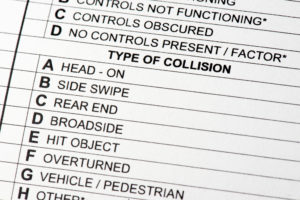
 Whether you are involved in a light or heavy traffic accident, you must file a crash report with the Illinois Department of Transportation (DOT) within 10 days. As a rule, you don’t have to file a report if the accident caused $1,500 worth of damages, but the rules can change if you were partially responsible for the incident. If you fail to file a report before the deadline, you may have to pay a hefty fine and lose your driver’s license.
The accident report can be filed by either the driver, the police officers who arrive at the scene or passengers. You should file a report as soon as possible so you can use it as proof for a personal injury case, which will allow you to get compensated for your medical bills and wages you lost during your recovery. You can also receive compensation for emotional trauma you suffered. Here are a few reasons why this is important:
Car accidents and traffic crashes can be stressful, confusing, and legally significant events. In communities like Antioch, Lake Villa, Gurnee, Waukegan, and other parts of Lake and northern Illinois, understanding when and how to file a traffic crash report under Illinois law is important for protecting your rights, complying with legal requirements, and preserving evidence for insurance claims or personal injury cases.
This comprehensive guide explains Illinois crash reporting requirements, how to file reports, important timelines, why reporting matters, and how legal guidance can help you navigate complex post-accident issues.
After a car accident, documenting the incident through a formal traffic crash report serves multiple crucial purposes:
Although statutory requirements have evolved, drivers may still need to file crash reports in situations involving serious injury, death, or significant property damage, and having a report can be essential in resolving disputes and claims.†
Under current Illinois law, drivers are no longer universally required to file a motorist crash report with the Illinois Department of Transportation (IDOT) in all circumstances. However, reporting remains critically important in many situations.†
Illinois statutes and related guidance outline clear conditions under which reporting is required:
In these scenarios, crash reporting by law enforcement and individuals remains crucial to compliance with state requirements.†
If law enforcement investigates the accident at the scene, the responding officer will typically prepare a police crash report. That report is key for insurance claims and legal matters. However, if no officer responds — particularly for accidents outside city limits or where law enforcement is otherwise unavailable — drivers may need to take steps to ensure the crash is properly documented.†
Even when reporting is not strictly required by statute, it is highly advisable, especially if someone was injured, the other driver disputes fault, or you plan to pursue an insurance claim or legal action after the accident.
If police or a sheriff’s deputy investigates the accident at the scene, they will complete an official report. This is often the most useful documentation for insurance claims and legal purposes. After the report is completed, a copy can usually be obtained through the law enforcement agency that responded or via the appropriate state reporting portal.
For certain types of non-injury, single-vehicle property damage crashes on Interstates or state roadways where law enforcement did not respond, the Illinois State Police provides an online reporting option. This allows motorists to complete a crash report electronically.†
Historically, motorists used the Illinois Motorist Report (SR-1050 series) to file crash information with IDOT. While legislative changes have altered reporting requirements, locally filed forms and law enforcement reports remain important in documenting crash details for insurance and legal purposes.†
A complete crash report typically includes:
This information becomes invaluable when determining liability, reconstructing the accident, and preparing insurance or legal claims.
Even though Illinois law does not require a motorist crash report in all situations, there are still deadlines for law enforcement and certain reporting processes:
Prompt reporting also facilitates faster claims processing and helps prevent disputes with insurance companies.
Even when reporting is not legally mandatory, filing an official accident report is often in your best interest:
Insurance companies and courts place significant weight on official reports, especially when third parties are involved.
Many individuals unintentionally weaken their claims by making avoidable errors:
Avoiding these mistakes helps preserve your ability to recover insurance compensation or pursue legal remedies for injuries and damages.
If you are involved in a crash near Antioch, Round Lake, Lake Villa, or north Lake County:
No. Current Illinois law no longer obligates all drivers to file a crash report with IDOT in every instance. However, you must still contact law enforcement at the scene for injury, death, or significant property damage, and reporting is strongly advised for insurance and legal purposes.†
Failing to report an accident involving injury, death, or significant property damage can lead to penalties, including fines, license suspension, or even criminal charges, especially if you leave the scene without providing required information.†
Law enforcement agencies are required to submit reports to the state within 10 days of a crash. If you are submitting your own documentation, do so as soon as possible after the accident to preserve evidence and details.†
Yes. If the driver is unable to file due to injury, a passenger may file the required report with law enforcement or through appropriate reporting channels.
Crash reports can be obtained online through the Illinois State Police portal, by mail to the Illinois State Police Patrol Records Unit, or directly from the law enforcement agency that investigated the crash. There is typically a small fee for copies.†
Navigating post-accident procedures, insurance claims, and potential legal disputes can be overwhelming. A skilled car accident attorney can:
Legal representation is especially important when injuries are serious or fault is contested.

If you or someone you know has been involved in a car crash, get in touch with the Law Offices of Robert T. Edens at (847) 395-2200 for a free consultation. We represent traffic victims in Chicago, Libertyville, Woodstock, Waukegan, and Antioch. With more than two decades of experience in auto accident claims, our team of professionals will leave no stone unturned to ensure you receive justice. This includes aggressive representation against the at-fault driver’s insurance company, which will try to deny or reduce your claim. Just look at our case files available on our website and see our success rate for yourself.

The Law Offices of Robert T. Edens, Personal Injury and Workers' Compensation Law Office, have offices in Antioch, Waukegan, Grayslake, Woodstock and Barrington. We represent clients throughout the communities of Antioch, Waukegan, Grayslake, Barrington, Woodstock, Buffalo Grove, Deer Park, Gurnee, Lake Zurich, Round Lake, McHenry, Cary, Crystal Lake, Libertyville, Lincolnshire, Mundelein, Vernon Hills, Wheeling, North Chicago, Zion, Inverness, Palatine, Wauconda, Island Lake, Fox Lake, Barrington Hills, Spring Grove, Lake Bluff, Lakemoor, Long Grove, Lake Villa, Kildeer, Wadsworth, Indian Creek, Fox River Grove, Lindenhurst and other cities within Lake and McHenry Counties Illinois.
© 2026 The Law Offices of Robert T. Edens, LLC., All Rights Reserved, Reproduced with Permission Privacy Policy | Sitemap | Disclaimer
Powered By