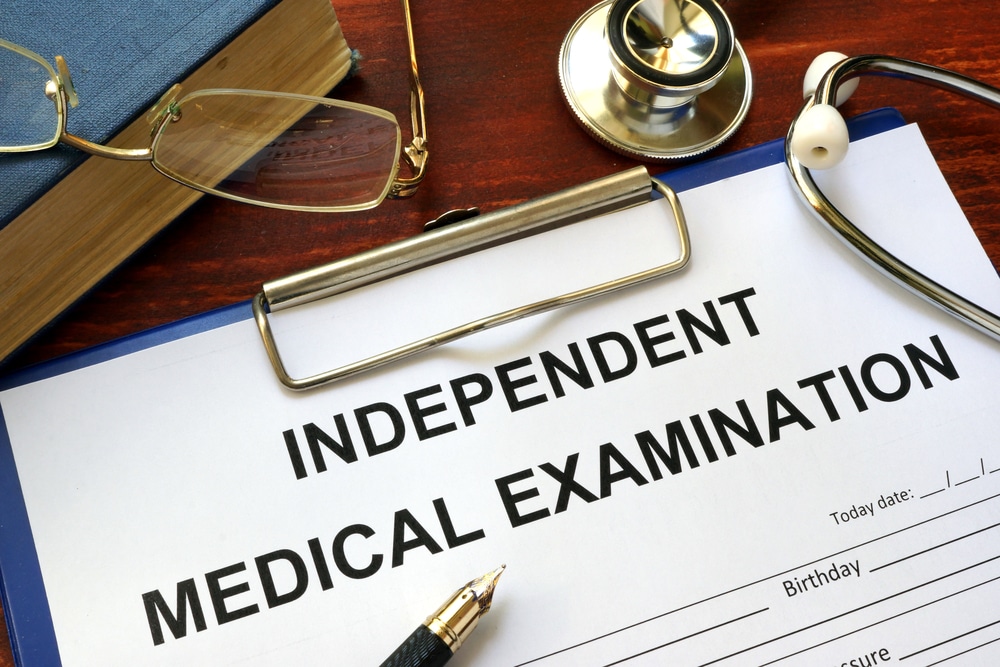
As Illinois workers’ compensation attorneys serving injured workers across Antioch and throughout the state, we understand that being sent for an Independent Medical Examination (IME) can be stressful. Many of our clients feel uncertain about what will happen, why the insurance company requested it, and how it could affect their benefits. An IME is not the same as a regular doctor visit. It is an evaluation arranged by your employer or their insurance carrier, often to challenge or verify your treating physician’s opinions. Understanding your rights and obligations under Illinois law can make this process less intimidating and help protect your claim.
Under Section 12 of the Illinois Workers’ Compensation Act (820 ILCS 305/12), an employer has the right to request that an injured worker undergo an independent medical examination by a doctor of the employer’s choosing. This law allows the employer or insurance company to obtain a second opinion about your medical condition, treatment plan, and ability to work.
The IME physician’s role is to provide an assessment, not to offer treatment. The insurance company uses the IME report to determine whether your injury is work-related, whether you still need ongoing medical care, and when or if you are able to return to work. Because the IME doctor is selected and paid by the insurance company, these evaluations can sometimes favor the employer’s position. That is why it is important to approach the exam prepared and understand how the findings may impact your benefits.
You may be asked to attend an IME for several reasons. Common scenarios include:
Employers are allowed to request more than one IME if your condition changes or if the claim involves complex medical issues. However, requests must be reasonable in frequency and location under 820 ILCS 305/12, which also requires the employer to pay for the examination and reimburse your travel expenses and lost wages for attending the appointment.
When you arrive at the IME, the doctor will have already received copies of your medical records and injury report. The exam typically includes the following steps:
The IME doctor may conclude that your injury is not work-related, that you are fit to return to work sooner than your treating physician believes, or that no further treatment is needed. These opinions can directly impact your right to medical coverage and temporary total disability (TTD) benefits under 820 ILCS 305/8(b).
The insurance company may use the IME report to deny or limit your claim. If the IME doctor states that your condition is not job-related or that you can return to work, your benefits may be reduced or terminated. However, under Illinois law, the IME is not the final word. Your treating physician’s opinions still carry significant weight, especially if your doctor has treated you consistently and provides detailed medical evidence supporting your condition.
If the IME conflicts with your treating doctor’s findings, the dispute can be presented to an arbitrator with the Illinois Workers’ Compensation Commission (IWCC). The arbitrator will review both medical opinions and decide which is more credible based on the evidence. Having legal representation during this process ensures that your rights are protected and that your side of the medical story is fully presented.
Illinois law provides several important protections for injured workers undergoing an IME:
Employers and insurers must follow these requirements under 820 ILCS 305/12, and failure to do so could affect the validity of their medical findings.
At The Law Offices of Robert T. Edens, P.C., we thoroughly prepare each client for an IME. We review what questions to expect, advise on how to respond clearly, and ensure that any inconsistencies between medical records and statements are addressed. We also monitor whether the insurance company follows proper legal procedures when scheduling and conducting the IME.
If the IME report is unfavorable, we can challenge it by obtaining additional opinions from your treating physician or arranging a Section 12(b) rebuttal examination from another qualified doctor. We also present testimony and medical evidence before the IWCC to demonstrate why your treating doctor’s conclusions should carry greater weight. Our goal is to make sure your benefits reflect your actual medical condition—not an insurer’s biased interpretation.
Many workers unintentionally hurt their cases by saying too much or downplaying their pain during the IME. Avoid these common errors:
Always remember that the IME doctor is not your treating physician. Their duty is to report findings to the insurance company, not to treat you or advocate for your recovery.
Illinois law allows employers to request an independent examination to verify the nature and extent of your work-related injury under 820 ILCS 305/12. Refusing to attend without a valid reason can lead to suspension of benefits. However, the request must be reasonable in timing, location, and frequency.
You may bring a friend or family member to drive you to the appointment, but most doctors will not allow another person in the exam room. However, you can document what occurs during the visit and share those details with your attorney immediately afterward.
No. The IME doctor’s role is solely to evaluate your condition and provide a report to the insurance company. They do not prescribe medication, order therapy, or provide ongoing care.
If there is a conflict between your treating doctor and the IME, the issue can be presented before an arbitrator at the Illinois Workers’ Compensation Commission. The arbitrator will review both opinions and determine which is more credible. Having experienced legal representation greatly improves the outcome in these disputes.
Yes. If the employer or insurer relies on the IME report to make decisions about your claim, you have the right to request and review it under 820 ILCS 305/12. Your attorney will ensure that you receive a copy.
Document your experience in detail after the exam and share it with your attorney. If there is evidence of bias, improper questioning, or inaccurate reporting, your lawyer can challenge the findings and seek additional medical evaluations.
If you have been scheduled for an independent medical exam or believe an IME report is
jeopardizing your benefits, our legal team at The Law Offices of Robert T. Edens, P.C. can help. We understand how these exams impact your claim and will fight to ensure your rights are protected under Illinois law. Contact our Illinois workers’ comp lawyers at The Law Offices of Robert T. Edens by calling us at 847-395-2200 to receive your free consultation.
Our firm represents injured workers in Antioch and throughout Illinois, with office locations at:
We are committed to protecting Illinois workers and ensuring they receive the compensation they deserve.

The Law Offices of Robert T. Edens, Personal Injury and Workers' Compensation Law Office, have offices in Antioch, Waukegan, Grayslake, Woodstock and Barrington. We represent clients throughout the communities of Antioch, Waukegan, Grayslake, Barrington, Woodstock, Buffalo Grove, Deer Park, Gurnee, Lake Zurich, Round Lake, McHenry, Cary, Crystal Lake, Libertyville, Lincolnshire, Mundelein, Vernon Hills, Wheeling, North Chicago, Zion, Inverness, Palatine, Wauconda, Island Lake, Fox Lake, Barrington Hills, Spring Grove, Lake Bluff, Lakemoor, Long Grove, Lake Villa, Kildeer, Wadsworth, Indian Creek, Fox River Grove, Lindenhurst and other cities within Lake and McHenry Counties Illinois.
© 2026 The Law Offices of Robert T. Edens, LLC., All Rights Reserved, Reproduced with Permission Privacy Policy | Sitemap | Disclaimer
Powered By