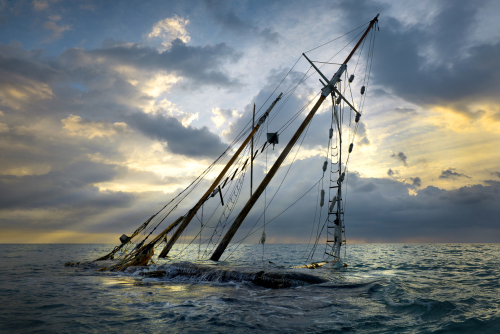
Boating is a favorite pastime for many in the Chicago area, including on scenic Lake Michigan, Flatfoot Lake, Maple Lake, and others. However, there are many boating accidents in the state, including 21 boaters who died in boating accidents in 2020.
A common problem in boating injuries and deaths is the boat capsizing in bad weather or for other reasons. This is a severe emergency. But if you keep your head and follow the advice below, the situation can be resolved safely. If you were injured in a recent boating accident, our Lake County personal injury lawyer at The Law Office of Robert T Edens can help today.
Why Do Boats Capsize?
Most capsizing cases involve small boats, about 10% being eight-foot crafts. Other standard capsized boats are 15 to 19 feet long, representing 40% of all cases. Many of these boats are for fishing, and the cockpits are hard to drain, frequently on the water in bad weather, and carry too much gear.
Also, many boats capsize because of improper weight distribution. Boats in the 15 to 19-foot range are often the most susceptible to capsizing because of poor weight distribution. All it can take is one person too many on the boat to cause the boat to flip in rough water. Other common causes of capsizing boats are leaks and piloting the boat at an unsafe speed during turns.
Steps To Take If Your Boat Capsizes but Remains Afloat
A capsized boat is one of the most stressful emergencies a boater can encounter. Yet in many cases—especially with small recreational boats, sailboats, and vessels with built-in flotation—the boat will turn over but remain afloat. When this happens, your actions in the first few minutes can determine whether you and your passengers stay safe until help arrives. The key is to remain calm, act methodically, and follow proven safety steps. Below are the essential actions to take if your boat capsizes but does not sink.
1. Stay Calm and Account for Everyone
The initial shock of capsizing can disorient even experienced boaters. Before doing anything else, take a deep breath and remain calm. Panic leads to poor decisions and wasted energy.
Immediately:
- Check that everyone is conscious and above water
- Call out to confirm each person’s location
- Make sure no one is trapped under the overturned hull
- Assist anyone who cannot swim or appears injured
If anyone is under the boat, guide them toward the air pocket that usually forms beneath the hull and help them out from under it as quickly as possible.
2. Stay With the Boat
One of the most important rules of survival at sea is to stay with your vessel. A floating boat—whether upright or overturned—is far easier for rescuers to spot than a person in the water. Even a partially submerged hull provides flotation and a visual target for search teams.
Do not attempt to swim to shore unless it is extremely close, conditions are safe, and all members of your group are strong swimmers. In open water or uncertain distance, staying with the boat is the safest option.
3. Put On Life Jackets (or Secure Them More Firmly)
If you were not already wearing a life jacket, this is the moment to put one on. Many boating accidents escalate sharply when passengers attempt to tread water or cling to the hull without proper flotation.
If life jackets are floating nearby:
- Gather them immediately
- Assist children, elderly individuals, or weak swimmers first
- Strap them on properly, securing all buckles
If the boat’s emergency gear is intact, gather floating items such as cushions, coolers, or lines to increase group flotation.
4. Climb Onto the Hull If Possible
With the boat upside-down or partially rolled, the hull often remains right at the surface. Climbing onto the hull helps:
- Reduce the risk of hypothermia
- Keep you visible to rescuers
- Conserve energy
- Avoid injuries from debris or marine life
If you cannot climb fully onto the hull, position yourself so you can hold onto a secure point, keeping your chest and head above water as much as possible.
5. Check for Emergency Supplies and Distress Signals
Some safety equipment may float free as the boat overturns. Look for:
- Waterproof VHF radios
- Flares or signaling devices
- Emergency beacons (EPIRB or PLB)
- Whistles, mirrors, or strobe lights
If your emergency position-indicating radio beacon is reachable, activate it immediately. Even simple items such as brightly colored cushions can help you attract attention.
6. Right the Boat (If Safe and Appropriate)
Certain small sailboats, dinghies, or lightweight motorboats can be righted with proper technique. Before attempting this, consider:
- The sea conditions
- The strength and skill of your group
- Whether righting the boat creates additional risk
- Whether the boat might capsize again
If you can right the vessel safely:
- Move together to one side
- Use the centerboard or exposed edge for leverage
- Work as a team to roll the boat back upright
Once upright, bail water using buckets, bilge pumps, or even cupped hands.
7. Conserve Energy and Prepare for Rescue
Once the immediate danger stabilizes, shift focus to endurance and visibility. To conserve energy:
- Huddle together to maintain body heat
- Keep movement minimal
- Use clothing or gear to shield from wind and sun
- Periodically check on weaker or colder individuals
Signal passing boats, aircraft, or rescuers using reflective objects, bright colors, radios, or flares.
8. Stay Positive and Alert
Mental attitude plays a major role in survival situations. Staying calm, confident, and observant increases your chances of rescue. Rescuers often locate overturned boats long before spotting swimmers.
Contact Our Lake County Personal Injury Lawyer
A capsized boat is frightening, but when the vessel remains afloat, your chances of survival are high—especially if you stay with the boat, put safety first, and follow a clear sequence of steps. By preparing before you launch and knowing what to do in an emergency, you can significantly improve the outcome for yourself and your passengers.
If you were in a boat accident because of someone’s negligence, you have legal options and could be eligible for compensation in a claim or lawsuit. Contact our Lake County personal injury lawyer at The Law Offices of Robert T. Edens, P.C. for assistance with your boat accident case at (847) 395-2200.
 When you are out to sea, and your boat capsizes, there is nothing you can do but wait to be rescued. Capsizing boats
  While not as common as motor vehicle accidents, boating accidents have caused a number of serious injuries and fatalities in Illinois.