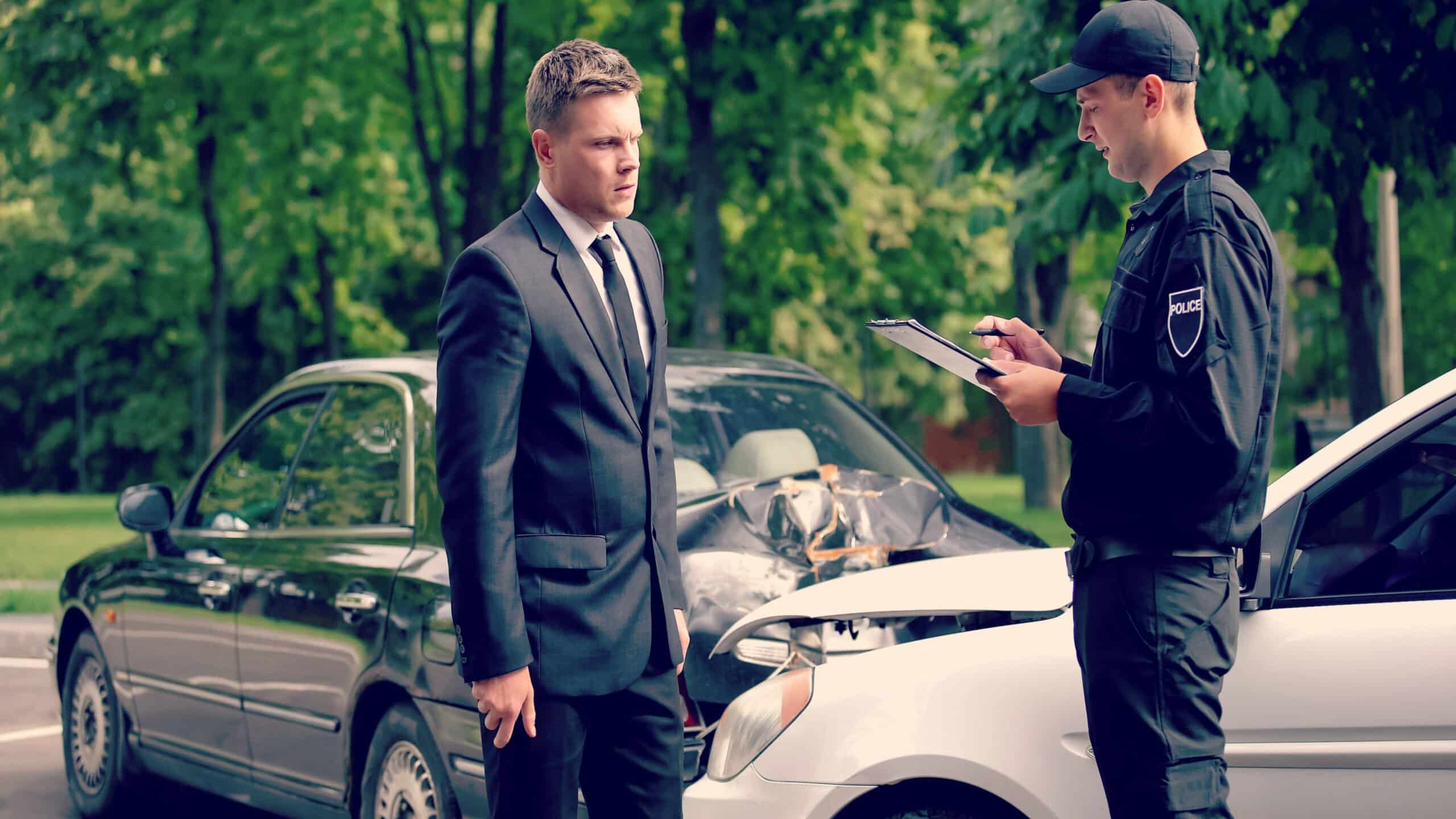
After a car accident in Illinois, one of the first documents people hear about is the police report. Many assume it automatically determines who wins or loses a claim. That is not how Illinois law works. Police reports can play an important role, but they are only one piece of the overall evidence. In some cases, a report supports an injured person’s claim. In others, it creates challenges that must be addressed carefully. We represent clients in Antioch and across Illinois, and we regularly see how police reports can either strengthen or complicate an injury case depending on what they contain and how they are used.
A police report is meant to record basic facts, not to decide civil liability. Officers respond to the scene to secure safety, document what they observe, and gather initial statements. They often do this quickly, under pressure, and without having the benefit of medical records or later investigation. Understanding how these reports are treated under Illinois personal injury law helps injured people avoid common mistakes and unrealistic expectations.
In Illinois, police crash reports are governed by 625 ILCS 5/11-401 through 11-408 of the Illinois Vehicle Code. These statutes require law enforcement to prepare a written report when a crash involves injury, death, or significant property damage. The report typically includes driver information, vehicle damage, road conditions, witness names, and a brief narrative.
What the report does not do is legally determine fault for civil purposes. Officers do not conduct a full liability investigation the way a civil court does. Their opinions are not binding on insurance companies or juries. A report is evidence, but it is not the final word.
A well-prepared police report can support a claim in several important ways. It creates an official record that the crash occurred at a specific time and place. It documents weather, lighting, and roadway conditions that may later become disputed. It also identifies all parties involved, which is critical when dealing with insurance carriers.
Police reports often note whether a driver was cited for a traffic violation. While a citation is not automatic proof of negligence, it can be persuasive. Under Illinois negligence law, violations of safety statutes may be used as evidence of fault when they relate directly to the cause of the crash. For example, a citation for failure to yield under 625 ILCS 5/11-904 may support a claim when right-of-way is disputed.
Police reports can also contain inaccuracies. Officers rely on statements made at the scene, and injured people are often in shock or pain. A casual comment can be written in a way that later appears to admit fault. We frequently see reports that include phrases like “Driver stated they did not see the other vehicle,” which insurers use to argue negligence.
Another issue arises when the report lists contributing factors without full context. An officer may check a box for “speed too fast for conditions” or “failure to reduce speed,” even when no citation is issued. Insurance companies may rely heavily on these checkboxes even though they are subjective and not based on accident reconstruction.
Illinois follows a modified comparative fault rule. An injured person may recover damages as long as they are not more than 50 percent at fault. Any assigned fault reduces the recovery proportionally.
Police reports sometimes influence how insurers argue fault percentages. Even a small negative statement in a report can be used to push more blame onto the injured party. This is one reason why police reports must be evaluated carefully rather than accepted at face value.
Police reports are not always final. If factual errors exist, it may be possible to request a correction or supplemental report, particularly for clerical mistakes. More often, inaccuracies are addressed through other evidence rather than changing the report itself.
Medical records, photographs, vehicle damage analysis, witness testimony, and expert opinions often carry more weight than a brief narrative written at the scene. We regularly build cases that explain why a police report is incomplete or misleading when compared to the full evidence.
Insurance companies rely heavily on police reports during the early stages of a claim. Adjusters often make preliminary liability decisions before all evidence is available. A favorable report may speed up negotiations. An unfavorable one may result in delays or low offers.
This does not mean the case is lost. It means the claim must be presented strategically, with clear documentation that addresses and corrects the insurer’s assumptions. Police reports start the conversation, but they do not end it.
No. Police reports do not legally determine civil liability. Fault is decided based on all evidence under Illinois negligence law.
Errors can be challenged through additional evidence such as medical records, photos, witness statements, and expert analysis.
Yes. Reviewing the report early helps identify issues that may affect insurance negotiations or litigation strategy.
A citation can be used as evidence, but it does not automatically prove fault. The circumstances still matter.
The absence of a ticket does not mean the other driver was not negligent. Civil claims rely on broader evidence.
Police reports can help or hurt an Illinois car accident claim depending on how they are handled. Understanding their limits is critical to protecting your rights and your recovery.
If you were injured in a crash, contact The Law Offices Of Robert T. Edens, P.C. to discuss your situation. Contact our Antioch car accident lawyer at The Law Offices of Robert T. Edens, P.C. today at 847-395-2200 to schedule your free consultation. We represent clients in Antioch and throughout the entire state of Illinois from our office locations at 392 Lake St., Antioch, IL 60002, 325 Washington St., Waukegan, IL 60085, and 1212 North Seminary Unit 1, Woodstock, IL 60098.

The Law Offices of Robert T. Edens, Personal Injury and Workers' Compensation Law Office, have offices in Antioch, Waukegan, Grayslake, Woodstock and Barrington. We represent clients throughout the communities of Antioch, Waukegan, Grayslake, Barrington, Woodstock, Buffalo Grove, Deer Park, Gurnee, Lake Zurich, Round Lake, McHenry, Cary, Crystal Lake, Libertyville, Lincolnshire, Mundelein, Vernon Hills, Wheeling, North Chicago, Zion, Inverness, Palatine, Wauconda, Island Lake, Fox Lake, Barrington Hills, Spring Grove, Lake Bluff, Lakemoor, Long Grove, Lake Villa, Kildeer, Wadsworth, Indian Creek, Fox River Grove, Lindenhurst and other cities within Lake and McHenry Counties Illinois.
© 2026 The Law Offices of Robert T. Edens, LLC., All Rights Reserved, Reproduced with Permission Privacy Policy | Sitemap | Disclaimer
Powered By