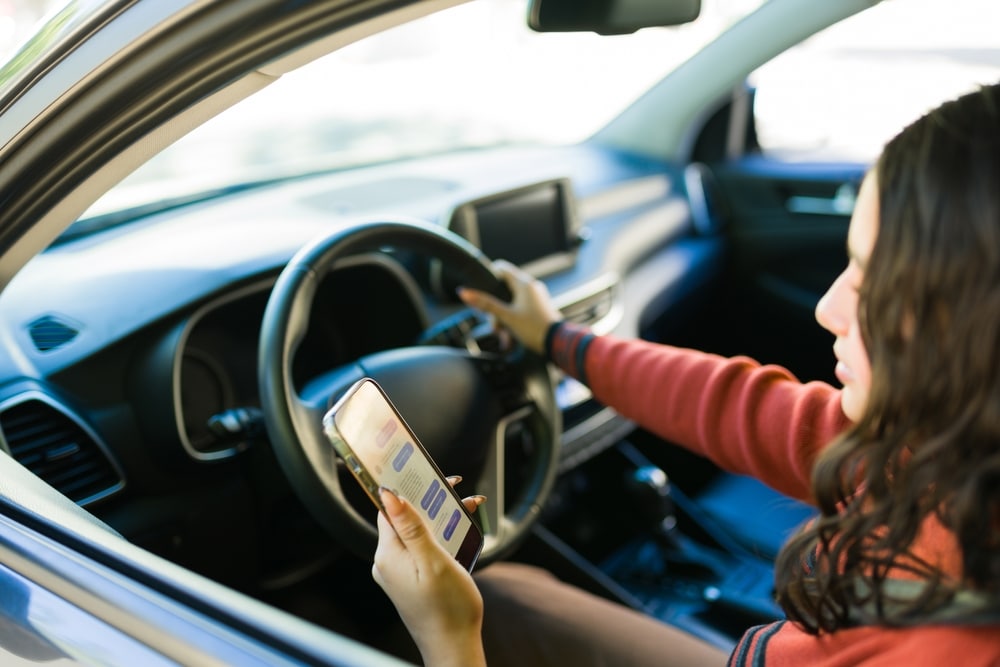
Distracted driving has become one of the leading causes of serious crashes on Illinois roads. We see the consequences every day in Antioch and throughout the state. A driver glances at a phone, reads a text, or scrolls for just a moment, and that brief distraction can change lives forever. Victims are often left dealing with painful injuries, lost income, mounting medical bills, and long-term uncertainty. Understanding how Illinois law treats distracted driving is an important first step in protecting your rights after a crash.
Illinois has taken a firm stance against distracted driving, particularly when it involves mobile phones. When a distracted driver causes an accident, the legal consequences can extend far beyond a traffic ticket. Civil liability, insurance disputes, and long-term financial exposure are common. Knowing how these laws work helps injured people make informed decisions about their next steps.
Distracted driving includes any activity that takes a driver’s attention away from the road. This can involve visual distractions, manual distractions, or cognitive distractions. Texting, emailing, scrolling social media, holding a phone, adjusting GPS settings, eating, or interacting with passengers can all qualify.
Illinois specifically addresses electronic device use under 625 ILCS 5/12-610.2, which generally prohibits drivers from using handheld electronic communication devices while operating a motor vehicle. The law allows limited exceptions, such as hands-free operation or emergency use, but texting while driving is broadly prohibited. Violations can result in fines, license points, and enhanced penalties when crashes or injuries occur.
Texting while driving is especially hazardous because it combines all three types of distraction. A driver looks away from the road, takes one or both hands off the wheel, and mentally disengages from driving. At highway speeds, even a few seconds of inattention can mean traveling the length of a football field without looking.
Crash investigations often reveal that distracted drivers never braked or reacted before impact. This lack of reaction can lead to rear-end collisions, intersection crashes, pedestrian strikes, and head-on collisions, many of which cause severe injuries.
When a distracted driver causes a crash, the consequences may extend beyond a citation. Traffic violations under 625 ILCS 5 can serve as evidence of negligence in a personal injury case. If a driver violated the handheld phone law at the time of the crash, that violation may support a finding of fault.
Illinois follows a modified comparative negligence system under 735 ILCS 5/2-1116. An injured person can recover damages as long as they are less than 51 percent at fault. However, compensation is reduced by the percentage of fault assigned to the injured party. Insurance companies often try to shift blame, which makes evidence of distracted driving especially important.
Proving distracted driving requires careful investigation. Police reports, witness statements, and crash scene evidence often provide early clues. In many cases, cell phone records become critical. These records can show whether a driver was texting or using data at the time of the collision.
Vehicle data, surveillance footage, and dashboard cameras may also help establish what happened in the moments before impact. Because this evidence can be lost or overwritten, acting quickly after a crash is often essential.
Distracted driving crashes often result in serious injuries because they involve delayed reactions or no reaction at all. Common injuries include traumatic brain injuries, spinal cord injuries, fractures, internal organ damage, and severe soft tissue injuries.
Victims may face extended medical treatment, physical therapy, and permanent limitations. Illinois personal injury law allows injured people to seek compensation for medical expenses, lost wages, reduced earning capacity, and pain and suffering when another driver’s negligence caused the crash.
Insurance companies frequently dispute distracted driving claims. Adjusters may argue there is no direct proof of phone use or attempt to blame weather, traffic, or the injured driver. Even when a citation was issued, insurers often resist paying full compensation.
Illinois law requires drivers to carry liability insurance, but policy limits are often insufficient to cover serious injuries. Identifying all available sources of recovery is a key part of protecting an injured person’s financial future.
Distracted driving cases are rarely straightforward. Evidence must be preserved, fault must be established, and insurers must be challenged when they minimize claims. Early action can make a significant difference in the strength of a case.
We work with accident reconstruction professionals and review electronic data to build clear, fact-based claims. The goal is accountability and fair compensation under Illinois law.
Yes. Illinois law generally prohibits texting while driving. There are limited exceptions for emergency situations, but routine texting or emailing while driving is not allowed.
Yes. A traffic ticket is not required to bring a personal injury claim. Civil cases rely on evidence of negligence, which can include phone records, witness testimony, and crash reconstruction.
Hands-free use is permitted in certain situations, but it does not automatically eliminate liability. If the driver was still distracted and failed to operate the vehicle safely, they may still be responsible for the crash.
Possibly. Under Illinois comparative negligence law, you may recover damages as long as you are less than 51 percent at fault. Any award is reduced by your share of responsibility.
Most Illinois personal injury claims must be filed within two years. Missing this deadline can bar recovery, which is why timely action is important.
Distracted driving crashes often leave victims facing serious injuries and complex legal challenges. The Law Offices of Robert T. Edens, P.C., represents injured clients in Antioch and throughout the entire State of Illinois.
Contact our Antioch car accident attorney at The Law Offices of Robert T. Edens, P.C. today at 847-395-2200 to schedule your free consultation. The firm serves clients from its offices at 392 Lake St., Antioch, IL 60002, 325 Washington St., Waukegan, IL 60085, and 1212 North Seminary Unit 1, Woodstock, IL 60098. We are committed to holding distracted drivers accountable and helping injured people pursue the compensation they deserve.

The Law Offices of Robert T. Edens, Personal Injury and Workers' Compensation Law Office, have offices in Antioch, Waukegan, Grayslake, Woodstock and Barrington. We represent clients throughout the communities of Antioch, Waukegan, Grayslake, Barrington, Woodstock, Buffalo Grove, Deer Park, Gurnee, Lake Zurich, Round Lake, McHenry, Cary, Crystal Lake, Libertyville, Lincolnshire, Mundelein, Vernon Hills, Wheeling, North Chicago, Zion, Inverness, Palatine, Wauconda, Island Lake, Fox Lake, Barrington Hills, Spring Grove, Lake Bluff, Lakemoor, Long Grove, Lake Villa, Kildeer, Wadsworth, Indian Creek, Fox River Grove, Lindenhurst and other cities within Lake and McHenry Counties Illinois.
© 2026 The Law Offices of Robert T. Edens, LLC., All Rights Reserved, Reproduced with Permission Privacy Policy | Sitemap | Disclaimer
Powered By