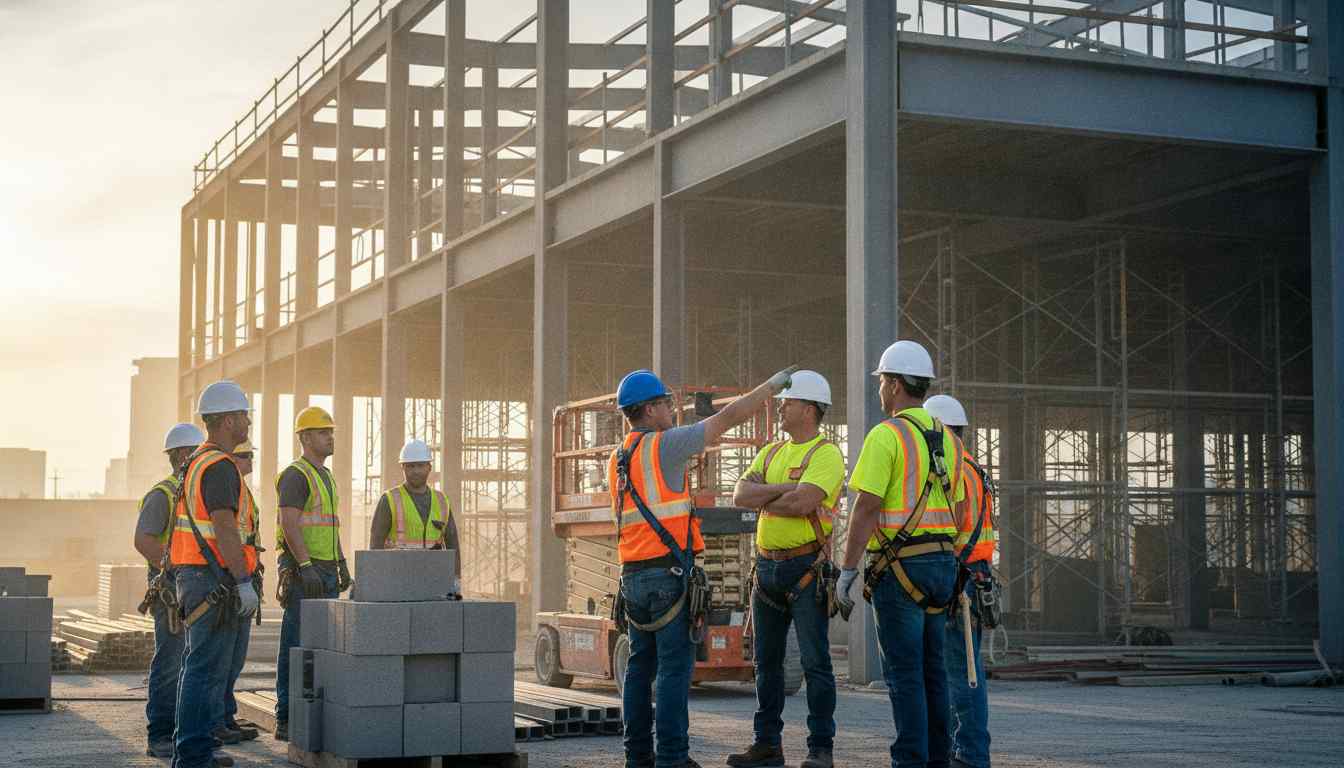
On an Illinois construction site, many different companies often work together, which can make it hard to figure out who is legally responsible when someone gets hurt. For example, a worker might be employed by one subcontractor, but another subcontractor could be in charge of the equipment, work area, or materials that led to the accident. Other parties, like the general contractor, property owner, or equipment company, might also be involved. When we look into a construction accident, we go beyond just identifying the injured worker’s employer. We review every company that played a part, since an injured worker might have a workers’ compensation claim and, in some cases, a separate claim against a negligent third party. Knowing the difference between these claims can have a big impact on the compensation you receive after a serious injury.
Yes, a subcontractor can be held responsible if its negligence causes or contributes to another worker’s injury. What matters most is the relationship between the injured worker and the subcontractor.
If the injured worker is an employee of that subcontractor, the Illinois Workers’ Compensation Act generally makes workers’ compensation the employee’s remedy against the employer for a work-related injury. Section 5(a) of the Act, 820 ILCS 305/5(a), generally prevents a covered employee from pursuing common-law damages against the employer for an injury sustained in the course of employment.
The situation may be different when a worker employed by Subcontractor A is injured because of the conduct of Subcontractor B. Section 5(b) recognizes actions against third parties that may be legally responsible for an employee’s injury. The injured worker may therefore have a workers’ compensation claim through the employer and potentially a third-party personal injury action arising from the same accident.
Many different trades work side by side on construction sites. Electricians, plumbers, roofers, concrete crews, excavators, steelworkers, carpenters, equipment operators, and others often share the same space.
One subcontractor can create a dangerous condition that injures someone employed by another company. Examples may include:
A subcontractor is not automatically liable just because they were working nearby. There must be evidence linking their actions to the accident and the injuries that resulted.
Workers’ compensation usually does not require proving that your employer was at fault. You can seek benefits for a work injury without showing negligence.
Under the Illinois Workers’ Compensation Act, available benefits can include necessary medical treatment, temporary disability benefits, permanent disability benefits, vocational rehabilitation in appropriate cases, and death benefits for qualifying surviving family members.
A third-party negligence lawsuit is different. In these cases, we need to show that the defendant had a legal duty, failed to meet it, and caused your injuries and damages.
That distinction matters because a personal injury action may permit recovery for damages that are not available through workers’ compensation, including pain and suffering and other compensable losses. We therefore investigate whether anyone other than the direct employer may bear responsibility.
Construction cases can also raise questions about which company is responsible for workers’ compensation coverage.
Under 820 ILCS 305/1(a)(3), a party undertaking covered work that directly or indirectly engages a contractor or subcontractor may become liable for workers’ compensation benefits to employees of that contractor or subcontractor if the contractor or subcontractor has not properly insured or guaranteed its workers’ compensation liability.
This provision can be particularly important when an injured worker discovers that an immediate employer lacks required workers’ compensation insurance.
The statute also permits a party that pays compensation under this provision to seek recovery from the contractor or subcontractor responsible for the obligation. These relationships can become complicated quickly, which is why we examine contracts, insurance policies, employment relationships, and the structure of the construction project.
Illinois construction negligence cases frequently involve the question of control. The Illinois Supreme Court addressed this issue in Carney v. Union Pacific Railroad Co., 2016 IL 118984. Illinois recognizes the principles of Section 414 of the Restatement (Second) of Torts concerning retained control. A party that entrusts work to an independent contractor but retains sufficient control over part of that work may have a duty to exercise that control with reasonable care.
This does not mean that a company becomes liable merely because it has general authority over a construction project or insists that contractors follow safety requirements. The degree of retained control matters. Courts may examine the parties’ contracts and what actually occurred at the jobsite to determine whether the company retained sufficient control over the manner in which the work was performed.
These questions can affect claims involving general contractors as well as relationships among other companies participating in the project.
Construction contracts are often critical evidence after an accident. We may review the general contract, subcontract, safety agreements, scopes of work, change orders, site rules, insurance provisions, and documents identifying which company was responsible for a particular part of the project.
Suppose another subcontractor created an unprotected floor opening and one of our clients fell through it. We would want to determine who created the opening, who controlled that area, which company was responsible for guarding it, who knew about the condition, and whether anyone removed previously installed protection.
The company name printed on a worker’s shirt does not necessarily answer those questions. The investigation must establish what each contractor was responsible for and what actually happened.
Sometimes a company calls a worker an “independent contractor” even though the actual working relationship suggests otherwise. The Illinois Employee Classification Act addresses classification within the construction industry. Under 820 ILCS 185/10, an individual performing services for a contractor is generally deemed an employee unless statutory requirements for independent-contractor status are satisfied. Among other considerations, the law examines control over the work, whether the service falls outside the contractor’s usual course of services, and whether the worker operates an independently established business.
The Act also expressly applies its provisions to subcontractors and lower-tier contractors.
Classification can therefore be a significant issue. We look at the actual working relationship rather than assuming that the label placed on a contract determines every legal right.
Construction sites change constantly. The condition that caused an accident may disappear within hours. Equipment can be moved, debris removed, openings covered, scaffolding dismantled, and crews transferred elsewhere.
We may seek photographs, video recordings, surveillance footage, incident reports, witness information, safety records, contracts, inspection documents, equipment records, and communications among contractors.
We also examine medical evidence linking the accident to the injuries. Serious construction accidents can result in spinal injuries, traumatic brain injuries, fractures, burns, amputations, internal injuries, and permanent physical limitations. Proper documentation helps establish both how the accident occurred and how it changed the worker’s life.
Construction accidents do not always have a single responsible party. Depending on the evidence, an investigation may involve a subcontractor, general contractor, property owner, equipment owner, manufacturer, trucking company, or another business. Illinois law requires us to evaluate each party’s conduct separately.
Workers should not assume that receiving workers’ compensation benefits means no other claim exists. Workers’ compensation may be only one part of the case. When another company’s negligence contributed to the accident, we examine whether a separate third-party claim should also be pursued.
Potentially, yes. Workers’ compensation benefits generally come through your employment relationship, while Illinois Workers’ Compensation Act § 5(b), 820 ILCS 305/5(b), addresses claims involving third parties that may be legally responsible for a work injury.
Generally, an employee covered by the Illinois Workers’ Compensation Act cannot bring an ordinary negligence lawsuit against the employer for a work injury. Section 5(a), 820 ILCS 305/5(a), generally makes workers’ compensation the exclusive remedy against the employer for injuries sustained in the course of employment.
Control is important in some Illinois construction negligence cases, but it is not the only possible issue. The Illinois Supreme Court’s decision in Carney v. Union Pacific Railroad Co., 2016 IL 118984, explains the retained-control principles applied when a party hires an independent contractor. Courts examine contractual rights and the actual circumstances to determine whether sufficient control existed.
Illinois law contains protections that can become important when a subcontractor lacks appropriate workers’ compensation coverage. Under 820 ILCS 305/1(a)(3), certain parties that engage contractors or subcontractors may become liable for compensation to the subcontractor’s employees when the subcontractor has not properly insured or guaranteed its liability.
It is possible to pursue workers’ compensation benefits and a qualifying third-party claim arising from the same construction accident, but Illinois law prevents an injured worker from simply obtaining an unrestricted double recovery for the same loss.
Section 5(b) of the Illinois Workers’ Compensation Act contains provisions addressing the employer’s reimbursement rights when a worker obtains compensation from a responsible third party. These issues can affect settlement calculations and how proceeds are distributed. We account for workers’ compensation liens and reimbursement rights when evaluating the overall case.
A construction accident can involve far more than a claim against your direct employer. When a subcontractor, general contractor, equipment company, property owner, or another business contributes to an accident, we investigate whether additional claims may be available.
At The Law Offices of Robert T. Edens, P.C., we represent injured workers and help determine how Illinois workers’ compensation law and potential third-party liability apply to the circumstances of a construction accident. We examine the companies involved, contracts, insurance coverage, site control, safety responsibilities, and evidence surrounding the injury.
If you were injured on an Illinois construction site and believe a subcontractor or another company may have caused or contributed to your accident, contact The Law Offices of Robert T. Edens, P.C. We can evaluate your workers’ compensation claim and determine whether the facts support additional claims against responsible third parties. Contact our Antioch workers’ comp attorney at The Law Offices of Robert T. Edens by calling us at 847-395-2200 to receive your free consultation.

The Law Offices of Robert T. Edens, Personal Injury and Workers' Compensation Law Office, have offices in Antioch, Waukegan, Grayslake, Woodstock and Barrington. We represent clients throughout the communities of Antioch, Waukegan, Grayslake, Barrington, Woodstock, Buffalo Grove, Deer Park, Gurnee, Lake Zurich, Round Lake, McHenry, Cary, Crystal Lake, Libertyville, Lincolnshire, Mundelein, Vernon Hills, Wheeling, North Chicago, Zion, Inverness, Palatine, Wauconda, Island Lake, Fox Lake, Barrington Hills, Spring Grove, Lake Bluff, Lakemoor, Long Grove, Lake Villa, Kildeer, Wadsworth, Indian Creek, Fox River Grove, Lindenhurst and other cities within Lake and McHenry Counties Illinois.
© 2026 The Law Offices of Robert T. Edens, LLC., All Rights Reserved, Reproduced with Permission Privacy Policy | Sitemap | Disclaimer
Powered By